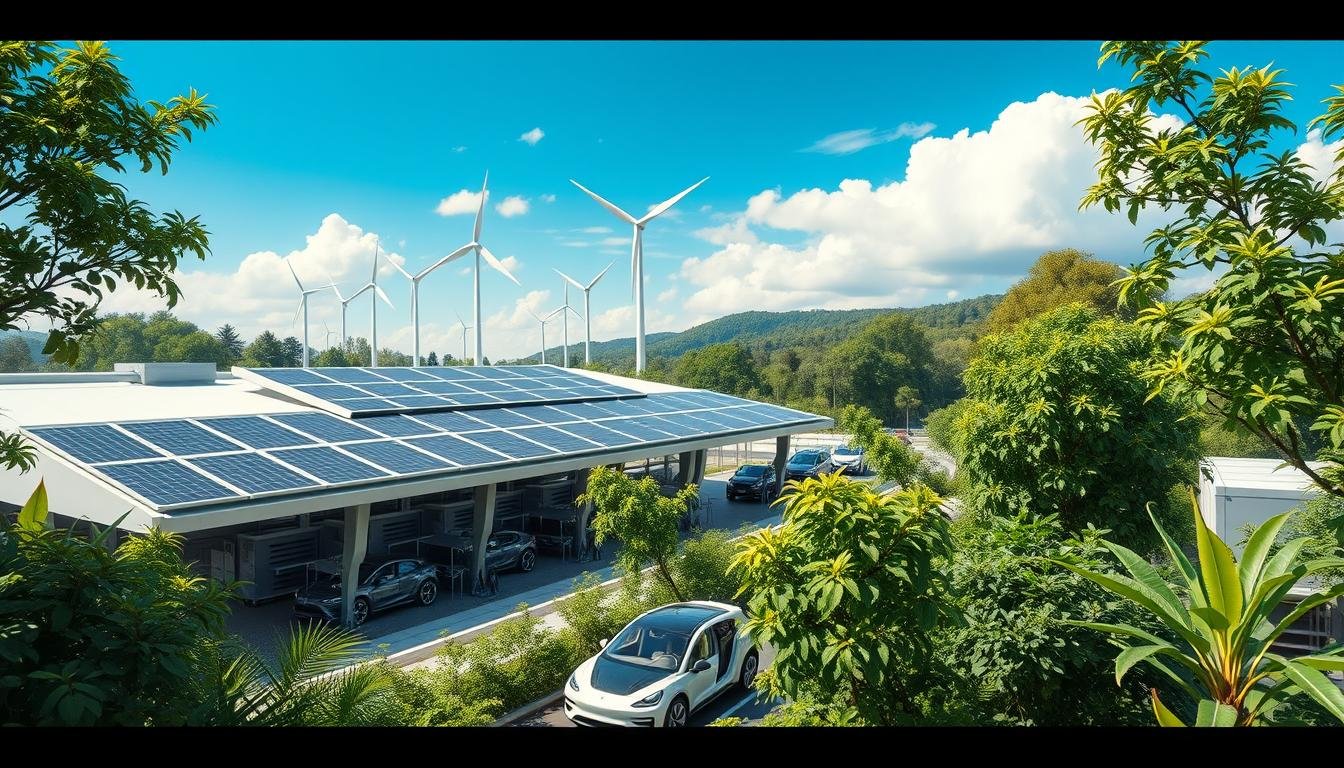
Why Automakers Are Prioritizing Sustainability in 2025
The car industry is changing fast to cut down on its harm to the environment. By 2025, car makers will focus more on making cars that are good for the planet. They will use new tech and work with governments to make cars better for our future.
Car makers are making cars that are kinder to the earth. They are making more electric and hybrid cars. They are also using solar and wind power to make cars, which helps the planet.

People want cars that are good for the planet. So, car makers are making more electric cars. By 2025, electric cars might make up over 20 million car sales. This big change will make the car industry much greener.
Key Takeaways
- Automakers are prioritizing sustainability to reduce their environmental impact and meet growing consumer demand for eco-friendly vehicles.
- The integration of renewable energy sources and expansion of electric and hybrid vehicle lineups are key drivers of sustainability in the automotive industry.
- Consumer demand for environmentally responsible brands is driving the adoption of sustainable practices in the automotive sector.
- Investments in electric vehicle production and sustainable manufacturing processes are expected to increase significantly in the coming years.
- The growth of the global connected car market is poised to drive the adoption of sustainable technologies and practices in the automotive industry.
- Automakers prioritizing sustainability are well-positioned to lead the industry’s transition to a greener future, with a focus on sustainability in the automotive industry 2025 and green initiatives by automakers.
The Shifting Landscape of Automotive Sustainability
The car industry is changing fast, thanks to automotive sustainability trends 2025. People care more about the planet, so they choose cars that are good for the environment. This means car makers are working hard to make cars that are better for the planet. They’re using clean energy and making cars from materials that can be recycled.
One big reason for this change is new rules on car emissions. For example, the EU plans to stop selling cars that run on gas by 2035. This is pushing car makers to make more electric and hybrid cars. Companies like Tesla are leading the way, making cars that use less energy and waste less.

People want cars that are kind to the planet. More and more are choosing electric or hybrid cars because they think they’re better for the environment. This trend is likely to keep growing, with more people choosing electric cars in the future.
Global Environmental Pressures
The world is facing big environmental challenges. We need to cut down on greenhouse gases and waste. Many countries are making rules to help us meet these goals.
Consumer Demand for Green Vehicles
People want cars that are good for the planet. As they learn more about environmental issues, they’re choosing cars that are better for the environment. This means more electric and hybrid cars are being sold.
Regulatory Changes Driving Innovation
New rules are pushing car makers to be more creative. They need to make cars that are cleaner and use less energy. This means using clean energy and making cars from materials that can be recycled.
| Company | Initiative | Goal |
|---|---|---|
| Tesla | Expansion of electric and hybrid vehicle lineups | Reduce greenhouse gas emissions |
| Volkswagen | Adoption of renewable energy sources | Minimize waste and reduce emissions |
| Volvo | Integration of recyclable materials | Achieve carbon neutrality |
Key Drivers Behind Automakers’ Sustainability Push
The world is moving towards a greener future, and car makers are leading the way. They aim to cut down emissions, boost energy use, and make their brands look better. With over 40 million electric cars on the roads by 2023, the trend is clear.
More people want cars that are good for the planet, and laws are pushing for cleaner cars too. This mix is driving the growth in electric vehicles.
Car companies are now focusing on being carbon-neutral. Big names like Tesla and Volkswagen are using more green energy and cutting down on pollution. The future of cars looks bright, with 127 million new cars expected by 2030.
Car recycling is also becoming a big deal. Companies are working hard to reduce waste and use more recycled parts.
The rise in electric cars is set to keep going. Sales jumped 25% in the first quarter of 2024 compared to 2023. As the industry grows, we’ll see even more green tech and practices from car makers.

| Year | Electric Vehicle Sales | Growth Rate |
|---|---|---|
| 2023 | 40 million | 20% |
| 2024 | 50 million | 25% |
Electric Vehicle Production: Leading the Green Revolution
The growth of electric and hybrid cars is key to a greener future. Green car innovations and automakers using eco-friendly components are leading the way. Ford, for example, is launching a range of electric vehicles like the Mustang Mach-E and the F-150 Lightning.
Better batteries and more charging spots are making electric cars more appealing. Automakers’ plans for net-zero emissions are also driving change. Experts predict electric vehicles could make up to 30% of all car sales by 2025.

- Better battery tech is on the horizon, with costs dropping by over 50% by 2030.
- Regenerative braking in EVs can boost energy use efficiency by up to 30%.
- More charging stations are being built, with a need to triple U.S. spots by 2025.
As the industry grows, we’ll see more green car innovations and a focus on automakers’ plans for net-zero emissions. This will lead the car world towards a greener future.
Renewable Energy Integration in Manufacturing
The automotive industry is changing fast. Automakers using renewable energy play a big role in this shift. They are turning to green energy in car manufacturing to be more sustainable. This means using solar and wind power to cut down on fossil fuels and harm to the environment.
Automakers addressing climate change are leading the way. For instance, BMW wants to cut CO2 emissions by 80% by 2030. They plan to do this by using more renewable energy and making their processes more efficient. Tesla and Toyota are also making big moves, aiming for zero CO2 emissions in their factories.
Using renewable energy helps in many ways. It cuts down energy use, lowers costs, and makes the industry greener. The main benefits are:
- Reduced greenhouse gas emissions
- Lower energy costs
- Improved brand reputation

By going green, car makers can save money and help the planet. As the industry grows, we’ll see even more creative ways to use green energy in car manufacturing and tackle climate change.
Sustainable Materials and Vehicle Components
Using recyclable and biodegradable materials in cars is key to being green. Car makers are now using these materials to cut down on waste and harm to the environment. For example, 50% of the luggage compartment paneling in the BMW i5 model consists of recycled plastic. The Ford Mustang Mach-E’s frunk is made from recycled materials, cutting down components from 6 to 1 and losing 6.6 pounds.
Green car projects are popping up everywhere. The Toyota Prius uses carbon-neutral plastics. BMW’s i3 model has natural fibers like hemp, flax, and bamboo. Ford makes seat fabrics from recycled plastic bottles, and Tesla uses vegan leather from pineapple leaves and apple peels.

- Reduced plastic waste
- Lower production costs
- Improved environmental performance
The car industry is moving towards being more eco-friendly. Using sustainable materials is vital for less waste and less harm to the planet. It supports green car projects.
Carbon Neutrality Goals and Implementation
The automotive industry is changing fast. Automakers’ sustainability goals are now key. They aim to cut down on greenhouse gas emissions and waste. This push for green automotive technologies is driving new ideas.
Using renewable energy and recyclable materials is vital. It helps shrink the industry’s environmental impact.
Some important steps for going carbon neutral include:
- Switching to electric vehicles (EVs) and renewable energy
- Starting sustainable manufacturing and supply chain practices
- Using carbon offsets to lessen emissions
Recent stats show the global use of ethanol in gasoline is about 7%. Biodiesel in diesel is around 5%. Also, making one EV produces 10 mtCO2e more than a traditional car. But, with the right moves and green automotive technologies, the industry can meet its automakers’ sustainability goals.

By focusing on green automotive technologies and sustainable practices, automakers investing in sustainability can hit their automakers’ sustainability goals. It’s critical to keep these goals in mind as the industry grows. This will help reduce its environmental harm.
Why Automakers Are Prioritizing Sustainability in 2025: Industry Leaders’ Perspective
As the world moves towards a greener future, car makers are focusing on their green plans for 2025. Big names like Tesla, Toyota, and Ford are leading the way. They’re investing in cars that are better for the planet.
These companies have big goals and are using clean energy and recyclable materials. For instance, Tesla aims to cut down on waste and emissions. Toyota wants to make sure all its cars and operations are zero emissions.
Tesla’s Sustainable Manufacturing Approach
Tesla is at the forefront of making cars with sustainable energy. It wants to power its factories with 100% clean energy by 2025. Tesla also works on recycling systems that can cut down waste by up to 90%.
Toyota’s Environmental Vision
Toyota is working towards making all its cars and operations zero emissions. They’re improving fuel efficiency with hybrid tech. This makes cars use about 30-40% less fuel than regular cars.
Ford’s Green Innovation Strategy
Ford is all about green cars and using eco-friendly materials. They’re investing in electric cars and using recycled and bio-based materials. Ford is also working with suppliers to use less energy and be more sustainable.

| Company | Initiative | Goal |
|---|---|---|
| Tesla | Sustainable manufacturing approach | Zero emissions from production facilities by 2025 |
| Toyota | Environmental vision | Zero emissions from vehicles and operations |
| Ford | Green innovation strategy | Reduce energy consumption and promote sustainable practices |
These leaders are pushing the car industry towards a greener future. They’re focusing on making cars and production processes more eco-friendly.
Circular Economy Principles in Automotive Production
The automotive industry is moving towards a circular economy to cut down waste and environmental harm. Automakers are focusing on reducing waste, recovering materials, and improving supply chains. This shift aims to make production more sustainable, reduce costs, and enhance environmental performance.
Adopting circular economy principles brings several benefits:
- Potential reduction of up to 75% in lifecycle carbon emissions per passenger kilometer by 2030
- Estimated increase in revenues per vehicle between 15-20 times the sales price through better material utilization and extended product lifecycles
- Significant emphasis on resource efficiency aimed at improving overall profitability in the automotive value chain
Renault and JLR are leading the way by applying circular economy principles. Renault plans to open Europe’s first car factory with a negative CO2 balance by 2030. JLR is repurposing i-Pace Jaguar batteries for energy storage systems. These efforts show the automakers’ role in sustainability and their dedication to green supply chains in the auto industry. By embracing eco-friendly innovations in car design, the industry can lessen its environmental footprint and boost sustainability.

Adopting circular economy principles helps the industry use fewer non-renewable materials like lithium and cobalt. It also promotes the reuse of parts and materials. This approach can lower costs, save natural resources, and reduce waste. As the industry moves towards sustainability, circular economy principles will be key to reducing environmental impact and improving sustainability.
| Company | Initiative | Goal |
|---|---|---|
| Renault | Car factory with negative CO2 balance | Launch by 2030 |
| JLR | Closed-loop battery repurposing | Utilize i-Pace Jaguar batteries for energy storage systems |
Government Collaboration and Infrastructure Development
The world is moving towards sustainable transport, and automakers and government collaboration is key. Governments help by supporting green infrastructure like electric car charging stations and public transport. This teamwork is vital for a network of sustainable transportation solutions that cut down emissions and clean the air.
Key steps for governments include investing in electric car charging, boosting public transport, and supporting cycling and walking. By working together, automakers and government collaboration can build a greener transport system. This benefits the planet and the economy.

Here are some examples of successful government collaboration and infrastructure development initiatives:
- Investing in electric vehicle charging infrastructure to support the growth of the electric vehicle market
- Developing public transportation systems that are efficient, reliable, and environmentally friendly
- Encouraging the use of non-motorized transportation options, such as cycling and walking, through the development of dedicated bike lanes and pedestrian-friendly infrastructure
| Initiative | Benefits |
|---|---|
| Electric vehicle charging infrastructure | Supports the growth of the electric vehicle market, reduces greenhouse gas emissions |
| Public transportation systems | Efficient, reliable, and environmentally friendly, reduces traffic congestion |
| Non-motorized transportation options | Encourages physical activity, reduces air pollution, and improves traffic safety |
Technology Innovation Driving Sustainable Manufacturing
The automotive industry is changing fast. New technologies are key to making it more sustainable. Car makers are using green tech to cut down on pollution. They’re also using smart factory solutions and energy-saving methods to make production better.
More car makers will use sustainable methods soon. They’re turning to renewable energy and cutting down on waste. This change is because people want green cars and governments want to lower emissions.
Smart Factory Solutions
Smart factory tech is making production better. It uses automation, robotics, and data to make cars faster and with less waste. This tech also helps save energy and improve quality.

Energy-Efficient Production Methods
Car makers are using less energy to make cars. They’re using solar and wind power. They’re also using energy-saving lights and heaters.
| Technology | Benefits |
|---|---|
| Smart Factory Solutions | Optimized production processes, reduced energy consumption |
| Energy-Efficient Production Methods | Reduced environmental impact, lower energy costs |
By using green tech and sustainable methods, car makers can be kinder to the planet. As the industry grows, new tech will be key to making it greener and cleaner.
Environmental Impact Reduction Strategies
The automotive industry is changing fast, with a big focus on automakers reducing environmental impact. Companies are now more aware of climate change and its effects. They are working on green vehicle initiatives to cut down their carbon footprint.
They are turning to renewable energy like solar and wind power. They are also using more recyclable materials.
It’s important to use sustainable automotive practices to reduce waste and emissions. Some strategies include:
- Using lightweight materials, such as carbon fiber or recycled aluminum, to reduce vehicle weight and improve fuel efficiency
- Implementing circular economy practices, including material recycling and reuse, to minimize waste and lower carbon footprints
- Conducting lifecycle assessments to evaluate the environmental impact of vehicles from production to disposal
Big names like Toyota and Volkswagen aim to be carbon neutral by 2040-2050. They believe using green technologies will save money and attract eco-friendly customers. This will help the economy grow and create more jobs.

By focusing on sustainable automotive practices and green vehicle initiatives, the industry can lessen its environmental harm. As automakers reducing environmental impact keep innovating, the industry will become greener and more responsible.
Investment in Green Research and Development
Automakers are focusing on sustainable automotive innovations to grow and lessen environmental harm. They’re investing in green research, exploring alternative fuels, sustainable materials, and better energy storage. This is key to making eco-friendly cars and production methods.
Research is happening in several areas:
- Alternative fuel technologies, like hydrogen fuel cells
- Sustainable material research, aiming for recyclable and biodegradable options
- Green energy storage solutions, including new battery tech
Companies like Volkswagen are leading the charge, aiming for 70% electric sales in Europe by 2030. They’re using modular electric drive matrix (MEB) platforms and teaming up with firms like Argo AI to speed up green car tech.

This green research investment will greatly impact the industry. It will drive growth and cut down on environmental harm. As more people want green cars, automakers must focus on green energy storage solutions and sustainable automotive innovations to stay ahead.
| Company | Investment in Green Research | Goal |
|---|---|---|
| Volkswagen | €35 billion | 70% electric vehicle sales in Europe by 2030 |
Meeting Global Sustainability Standards
The car industry is changing fast, and automakers meeting sustainability standards is key. They aim to cut down waste and lower greenhouse gas emissions. This push for green automotive goals and sustainable production practices is strong.
Reports show 9 big car makers are working on being carbon neutral by 2025. They look at every part of making a car, from getting parts to designing and using materials. They focus on using sustainable sourcing and green manufacturing practices to cut down carbon footprints.

- Using renewable energy
- Adding recyclable materials
- Increasing electric and hybrid cars
These steps help reduce waste, lower costs, and make the industry more sustainable.
Conclusion: The Future of Sustainable Automotive Manufacturing
The automotive industry is focusing more on sustainability in 2025. Automakers are using new green technologies and following circular economy rules. This helps them cut down on environmental harm.
Electric vehicles and better batteries are becoming common. The use of renewable energy and eco-friendly materials is also growing. This change is making cars more green and meeting our need for eco-friendly travel.
Help from governments and better infrastructure is key. It will help make charging networks widespread. This will make it easier to switch to cleaner fuel options.
With ongoing innovation and a strong focus on the environment, the future looks bright. The car industry will become greener, more efficient, and more focused on what customers want. This will change how we travel in the coming years.
FAQ
Why are automakers prioritizing sustainability in 2025?
Automakers are focusing on sustainability in 2025 for several reasons. They want to cut down on emissions and make their cars more energy-efficient. They also aim to boost their reputation by using green practices.
They’re doing this by making more electric vehicles, using renewable energy, and choosing materials that can be recycled.
How is the automotive industry’s landscape shifting towards sustainability?
The auto industry is changing fast to meet environmental challenges. There’s a big push to lower greenhouse gas emissions and reduce waste. More people want green cars, and new rules are pushing for innovation.
Car makers are stepping up by using sustainable methods to lessen their impact on the planet.
What are the key drivers behind automakers’ sustainability push?
Several factors are driving car makers to go green. They aim to cut emissions, use energy better, and look better to customers. To achieve this, they’re making more electric cars, using renewable energy, and picking materials that are good for the planet.
How is electric vehicle production leading the green revolution in the automotive industry?
Electric cars are at the forefront of the industry’s shift towards sustainability. Advances in battery tech, charging systems, and car range are key. Car makers are working hard to make electric cars better, which helps cut down on emissions and waste.
How are automakers integrating renewable energy sources in manufacturing?
Car makers are turning to renewable energy to power their factories. They’re using solar and wind power, and exploring other green energy options. This move helps them cut down on fossil fuel use and shrink their environmental footprint.
What sustainable materials and vehicle components are automakers using?
Car makers are using eco-friendly materials in their cars. They’re choosing biodegradable stuff, recycled parts, and new green materials. This approach helps reduce waste, saves money, and makes their cars more environmentally friendly.
How are automakers achieving carbon neutrality?
Car makers are working hard to be carbon neutral. They’re using electric cars and renewable energy to cut down emissions and waste. These efforts help them reduce their environmental impact.
How are industry leaders prioritizing sustainability in 2025?
Big names like Tesla, Toyota, and Ford are leading the way in sustainability. They’re investing in green tech to reach carbon neutrality. They’re setting big goals, using renewable energy, and choosing materials that can be recycled.
How are automakers implementing circular economy principles in their production processes?
Car makers are adopting circular economy ideas to cut waste and environmental harm. They’re focusing on reducing waste, recovering materials, and making their supply chains more efficient. These steps help make their production processes more sustainable.
How are government collaboration and infrastructure development supporting the transition to sustainable transportation?
Governments and car makers are working together to make transportation greener. They’re investing in electric car charging, public transport, and walking and biking options. These efforts help lower emissions and make the industry more sustainable.
How are innovative technologies driving sustainable manufacturing in the automotive industry?
New tech is key to making car making more sustainable. Smart factories, energy-saving methods, and tools to monitor sustainability are important. These technologies help cut energy use, lower costs, and improve environmental performance.
What environmental impact reduction strategies are automakers implementing?
Car makers are using many strategies to reduce their environmental impact. They’re using renewable energy, recyclable materials, and expanding their electric and hybrid car lines. These steps help cut waste, save money, and make the industry greener.
How are automakers investing in green research and development?
Car makers are putting money into green research to drive sustainability. They’re exploring alternative fuels, sustainable materials, and better energy storage. These investments help make their cars and production processes more eco-friendly.
How are automakers meeting global sustainability standards?
Car makers aim to meet global sustainability standards to reduce waste and emissions. They’re using renewable energy, recyclable materials, and expanding their electric and hybrid car lines. These efforts help them meet these important goals.