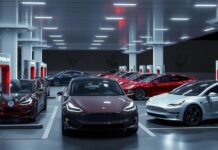
2025 EV Charging Stations: How They’re Transforming Road Trips
Planning a road trip in an electric vehicle? In 2025, EV charging stations are faster, more efficient, and easier to find than ever before. Ultra-fast chargers and expanded networks make long-distance travel seamless for EV drivers. The future of EV charging stations is bright, with a big role in shaping road trips.
As electric vehicles become more common, 2025 EV charging stations are evolving. They are designed to meet the growing demand for convenient, fast, and accessible charging.

The EV charging network of 2025 will change how we travel. Fast-charging EV stations are becoming more common. The “universal Plug and Charge” initiative from SAE International will launch in early 2025, making charging easier.
As the need for electric vehicle charging grows, so will the development of fast-charging stations. This makes long-distance travel in an electric vehicle more practical and convenient.
Key Takeaways
- The 2025 EV charging stations are faster, more efficient, and easier to find than ever before.
- The EV charging network of 2025 is expected to play a significant role in shaping the road trip experience.
- Fast-charging EV stations are becoming increasingly common, making long-distance travel in an electric vehicle more practical and convenient.
- The “universal Plug and Charge” initiative from SAE International is set to launch in early 2025, streamlining the charging process.
- The future of EV charging stations is looking bright, with the development of fast-charging EV stations expected to accelerate.
- The EV charging network of 2025 will provide seamless integration with smart grid systems, allowing for more efficient and secure charging authentication.
The Current State of 2025 EV Charging Stations
The need for easy, fast, and accessible charging is rising. This is because more people are choosing electric vehicles. The ev charging infrastructure 2025 is growing, with different charging levels like Level 1, Level 2, and Level 3.
Looking at the ev charging infrastructure 2025, we see a big change. With thousands of new stations coming, long trips in EVs will be easier. Also, linking EV charging with smart grids helps save energy and money.
Network Coverage and Availability
Companies like EVgo Inc. and Sheetz Inc. are investing in more charging stations. EVgo Inc. aims to add 7,500 stations, making their network over 10,000 fast charging stalls. This growth will make how ev chargers are improving a big deal by 2029.

Charging Speed Capabilities
Charging speeds are getting faster, with some stations going up to 500 kilowatts. This is key for road trip with ev 2025, allowing drivers to charge quickly. The ev charging technology advancements are vital for meeting the demand for electric cars.
Revolutionary Changes in Charging Technology
The world of electric vehicle (EV) charging is changing fast. More EV charging stations are popping up, challenging gas stations. This shift is driven by new tech. As EVs become more popular, finding quick and easy ways to charge them is key.
New fastest EV chargers 2025 can fill up a car to 80% in under 10 minutes. Companies like CATL and Zeekr are leading this charge. For example, CATL’s Shenxing Plus battery can give a car 600 kilometers of range in just 10 minutes. Zeekr’s 007 sedan can go from 10% to 80% in over 10 minutes.

New ideas like universal Plug and Charge and smart pavement tech are also on the rise. These innovations make long-distance EV travel easier and more appealing. As tech keeps improving, we’ll see even better ways to charge EVs, closing the gap with gas stations.
These advancements bring many benefits:
- Charging times are getting shorter, easing worries about range and making long-distance EV travel more doable.
- There are more charging options now, including EV charging stations and smart pavement tech.
- Efficiency is going up, thanks to fastest EV chargers 2025 and other new solutions, cutting down charging times and boosting range.
High-Speed Charging Networks Expansion
The rise of electric vehicles (EVs) has boosted the need for fast charging spots. Companies and governments are now focusing on ev charging infrastructure expansion. This means more level 3 ev charging stations are popping up, making charging quicker and easier.
Recent numbers show a record high in high-speed charging station installations in the fourth quarter. Leaders like Volvo and ChargePoint are at the forefront. This growth in public ev charging stations helps drivers charge on the move. It cuts down on range anxiety and encourages more people to switch to EVs.

- Faster charging times, with some stations able to charge an EV up to 80% in approximately 30 minutes
- Increased convenience, with many stations located near shopping centers and restaurants
- Improved range and reduced anxiety for long-distance drivers
As more public ev charging stations appear, we can expect new ideas and partnerships. The ev charging infrastructure expansion shows no signs of slowing. It’s an exciting time for the EV world and drivers.
Smart Features and Connected Services
The cost of ev charging stations is expected to drop in 2025. This is thanks to advancing technology, making them more affordable for everyone. Modern ev charging stations offer real-time updates on availability. This helps users plan their charging sessions better.
High-power ev chargers are a big part of this. They can charge vehicles much faster than standard chargers.
Automated payment systems are another smart feature. They let users pay for charging without cash or cards. This is great for those who want to charge quickly and move on.
Some key benefits of smart ev charging stations include:
- Real-time availability updates
- Automated payment systems
- Predictive maintenance technology
These features, along with faster charging speeds, make high-power ev chargers appealing. As more people want ev charging stations, we’ll see even more new features and technologies.

| Feature | Benefit |
|---|---|
| Real-time availability updates | Allows users to plan their charging sessions more efficiently |
| Automated payment systems | Makes it easy for users to pay for their charging sessions |
| Predictive maintenance technology | Helps to reduce downtime and improve overall efficiency |
The Evolution of Charging Infrastructure
As electric road trips become more popular, roadside ev charging stations are key. The need for quick and easy charging grows with electric vehicle demand. Today, ev charging times 2025 are getting faster thanks to new tech.
Here are some important stats on EV charging growth:
- Tens of thousands of electric vehicle (EV) charging stations are available in the United States.
- Nearly 80% of public EV charging ports in the United States were Level 2 chargers as of 2023.
- DC fast chargers provide approximately 100 to 200+ miles of range per 30 minutes of charging.
More charging stations are using renewable energy, like solar power. By 2025, 25% of them will be powered by green energy. This move to clean energy will help the environment and electric travel.

The growth of charging tech is vital for electric cars to become common. As tech improves, charging will get easier and faster. This will make electric trips possible for many.
| Charger Type | Range per Hour | Charging Time |
|---|---|---|
| Level 1 | 5 miles | 20 hours or more |
| Level 2 | 25 miles | 4-8 hours |
| DC Fast Charger | 100-200+ miles | less than 30 minutes |
Cost Analysis and Economic Impact
Understanding the cost of EV charging stations is key to their economic impact. As electric vehicles become more popular, finding affordable and efficient charging options is vital. The ev charging station profitability depends on several factors, like installation costs, how much consumers pay, and government help.
To find the best EV chargers, consider what kind of charging you need, the installation cost, and real-time ev charging updates. Installing an EV charging station can cost between $1,000 and $10,000, based on the type and level of charging. You also need to think about the cost of electricity and upkeep.

The economic effect of EV charging stations is big, with the global market expected to hit $100 billion by 2040. The ev charging station profitability will depend on providing efficient and affordable charging. Also, real-time ev charging updates are important for managing the charging process. By understanding these costs, businesses and consumers can make better choices about electric vehicles and charging infrastructure.
Some important things to look at in the cost analysis of EV charging stations include:
- Installation costs: The cost of setting up an EV charging station, including hardware and software.
- Operational expenses: The costs of electricity, maintenance, and other expenses for running an EV charging station.
- Consumer pricing models: How much consumers pay to use EV charging stations, like pay-per-use or subscription models.
- Government incentives and support: The help governments offer to encourage electric vehicle use and charging infrastructure development.
Universal Compatibility Solutions
The need for universal compatibility in electric vehicles is growing fast. Ev charger compatibility with all models is key. This ensures all electric car owners can charge anywhere, no matter who made their car. The idea of “universal Plug and Charge” is becoming more popular, with many companies working together to make it happen.
The world of ev charging stations is changing for the better. It’s all about making charging easy, fast, and accessible. Big names like BP Pulse, ChargePoint, and Electrify America are joining forces with car makers like Ford and Tesla. This move is expected to boost the industry a lot.
As more people buy electric cars, the need for charging spots will grow. By 2025, we’ll see more charging stations and lower prices for electric vehicles and charging gear.
Some important features of universal compatibility solutions include:
- Automatic charging and payment
- Interoperability between different charging networks
- Fast and ultra-fast charging capabilities
The goal is to make ev charging stations as easy to use as gas stations. We want to charge our cars quickly and easily, no matter who made them. With the ev charging demand 2025 on the rise, having universal solutions is vital for all electric car owners.
Impact on Long-Distance Travel
More electric vehicles (EVs) are hitting the roads, making ev road trip planning 2025 key. The growth of ev charging station expansion makes long trips easier for EV owners. Level 3 ev charging stations help reduce worries about running out of charge, allowing for longer drives.
Several factors are making long trips in EVs more doable. These include:
- EV models now go over 250 miles on a single charge.
- Charging stations are popping up every 50 miles on highways.
- Level 3 ev charging stations can fill up a car to 80% in under 30 minutes.
By 2032, there could be more ev charging stations than gas stations. This growth makes ev road trip planning 2025 easier for EV drivers. With more ev charging station expansion, we’ll see more EVs on long trips.

The need for ev road trip planning 2025 will keep growing. We’ll see new ways to travel long distances. With more level 3 ev charging stations and expanded charging, EV travel’s future looks promising.
Environmental Benefits and Sustainability
The growth of ev charging station locations has greatly helped the environment. These stations make it easy to charge electric vehicles. This leads to fewer greenhouse gas emissions and supports sustainability.
Ev charging subscription plans also help by making electric vehicles more affordable. This makes them a better choice for daily driving.
Charging an ev in remote areas is now easier, thanks to more charging stations. This helps the environment and supports rural areas. As more people want electric vehicles, the need for sustainable charging solutions will grow.
Some of the key benefits of ev charging stations include:
- Reduced greenhouse gas emissions
- Promotion of sustainable transportation
- Increased adoption of electric vehicles
- Support for rural development

The International Energy Agency says renewable energy made up 29% of global electricity in 2022. They predict it will hit 50% by 2050. As we move towards renewable energy, ev charging stations will play a big role in a green transportation future.
| Year | Renewable Energy Generation | Projected Growth |
|---|---|---|
| 2022 | 29% | 31.4% CAGR |
| 2050 | 50% | – |
Public-Private Partnerships in Infrastructure
The growth of electric vehicle (EV) charging is shaped by public-private partnerships. These partnerships are key to the EV industry’s expansion. Government grants for EV charging stations are a big help. Collaboration between the public and private sectors is vital for a good charging network.
Government programs offer funding for public charging stations. For instance, the Joint Office of Energy and Transportation helps with zero-emission transport. Private companies are also investing in EV charging, aiming for a smooth charging experience.

International efforts are also important for EV charging’s future. The SAE EVPKI Consortium, with big names from the auto and EV charger worlds, aims for a universal charging standard. This will let drivers charge anywhere, easily. Public-private partnerships will keep driving innovation and growth in EV charging, aiming for a green and efficient transport system.
User Experience Improvements
The world is moving towards electric vehicles, making user experience in EV charging more important than ever. A good ev road trip guide 2025 can greatly improve your journey. It’s key to consider charging an ev overnight for a better travel experience.
The time it takes to charge an EV depends on the charger and battery size. But, with DC fast chargers, you can charge up to 80% in 20-30 minutes. This makes long trips easier and more accessible for everyone.
Some features that make EV charging better include:
- Fast-charging networks with DC fast chargers
- Smart charging systems that optimize energy usage
- Mobile apps with real-time updates and contactless payments
- Subscription-based payment models for cost transparency and control

Using renewable energy and energy management systems can also help. As more people want EVs, improving the charging experience is key. This ensures a smooth and enjoyable charging process.
Improving user experience can make customers happier and reduce wait times. It also makes the charging system more efficient and green. As EVs become more popular, focusing on user experience is vital for growth.
Integration with Renewable Energy Sources
The world is moving towards a greener future. This means using electric vehicles (EVs) powered by renewable energy. With most electricity coming from fossil fuels, finding alternative sources is key. Ev charging station maintenance that uses solar or wind energy is a good start.
Renewable energy like solar or wind can cut down on harmful emissions. For example, a big tank of hydrogen can charge over 1,000 EVs, as Plug shows. Using on-site renewable energy can also ease the strain on the electric grid as EV numbers grow. It’s important to plan EV travel routes with renewable energy and charging stations in mind.

Using renewable energy with EV charging has many benefits. It makes the grid more stable and cuts down on fossil fuel use. Mobile ev charging solutions offer a clean alternative to fossil fuels. To make this work, we need to invest in better energy storage and smart grid tech.
Solar-Powered Charging Stations
Solar-powered charging stations are a great option for EVs. They use the sun’s energy, which is getting cheaper. This makes solar-powered stations more affordable and beneficial.
Wind Energy Integration
Wind energy is another good choice for EV charging. It’s clean and sustainable. Using wind energy can make EV charging stations less dependent on fossil fuels and lower their carbon footprint.
Grid Independence Solutions
Grid independence solutions are vital for using renewable energy with EV charging. They include energy storage systems and smart grid tech. These help make sure EVs always have power, even when the energy supply is not steady.
Conclusion
The world is shifting towards a greener future, and ev charging hubs 2025 are key. They help electric vehicles and long-distance travel evolve. Advances in ev battery tech and charging have solved old road trip problems.
Now, drivers can go on long trips without worry. High-speed charging stations are popping up on highways and transit hubs. This change has made driving electric vehicles a smooth, clean experience.
By 2025, over 50 million electric vehicles will hit the roads. This growth, along with strong charging networks, will greatly help the environment. It’s a step towards a cleaner, more sustainable way to travel.
FAQ
How are 2025 EV charging stations improving the experience of road trips?
2025 EV charging stations are changing road trips in big ways. They’re building high-speed charging networks that let electric cars travel far. They’re also making charging faster and easier, making trips more enjoyable for EV owners.
What are the key features and smart technologies being integrated into 2025 EV charging stations?
2025 EV charging stations are getting smarter. They offer real-time updates, easy payments, and predictive maintenance. These features make charging faster and more convenient for everyone.
How is the charging infrastructure evolving to meet the growing demand for EVs?
The charging infrastructure is changing fast to keep up with EVs. They’re building more high-speed chargers and placing them in strategic spots. This ensures EV drivers can charge easily wherever they go.
What are the cost considerations and economic impacts of 2025 EV charging stations?
The cost of 2025 EV charging stations is complex. It includes setup costs, how much people pay, and government help. These factors affect how profitable and appealing EVs are to use.
How are 2025 EV charging stations addressing the issue of universal compatibility?
2025 EV charging stations are making sure all cars can charge anywhere. This means no worries about which car can charge where. It’s making EVs more appealing to everyone.
What are the environmental benefits and sustainability aspects of 2025 EV charging stations?
2025 EV charging stations are great for the planet. They use clean energy like solar and wind. This makes driving electric a greener choice for everyone.
How are public-private partnerships shaping the development of 2025 EV charging infrastructure?
Public and private groups are working together to grow EV charging. Governments, companies, and international teams are investing in more chargers. This teamwork is key to making EVs more common.
What are the user experience improvements in 2025 EV charging?
2025 EV charging stations are making trips better for EV owners. They offer quick charging at public spots and easy charging at home. These improvements make EVs more appealing for long trips.