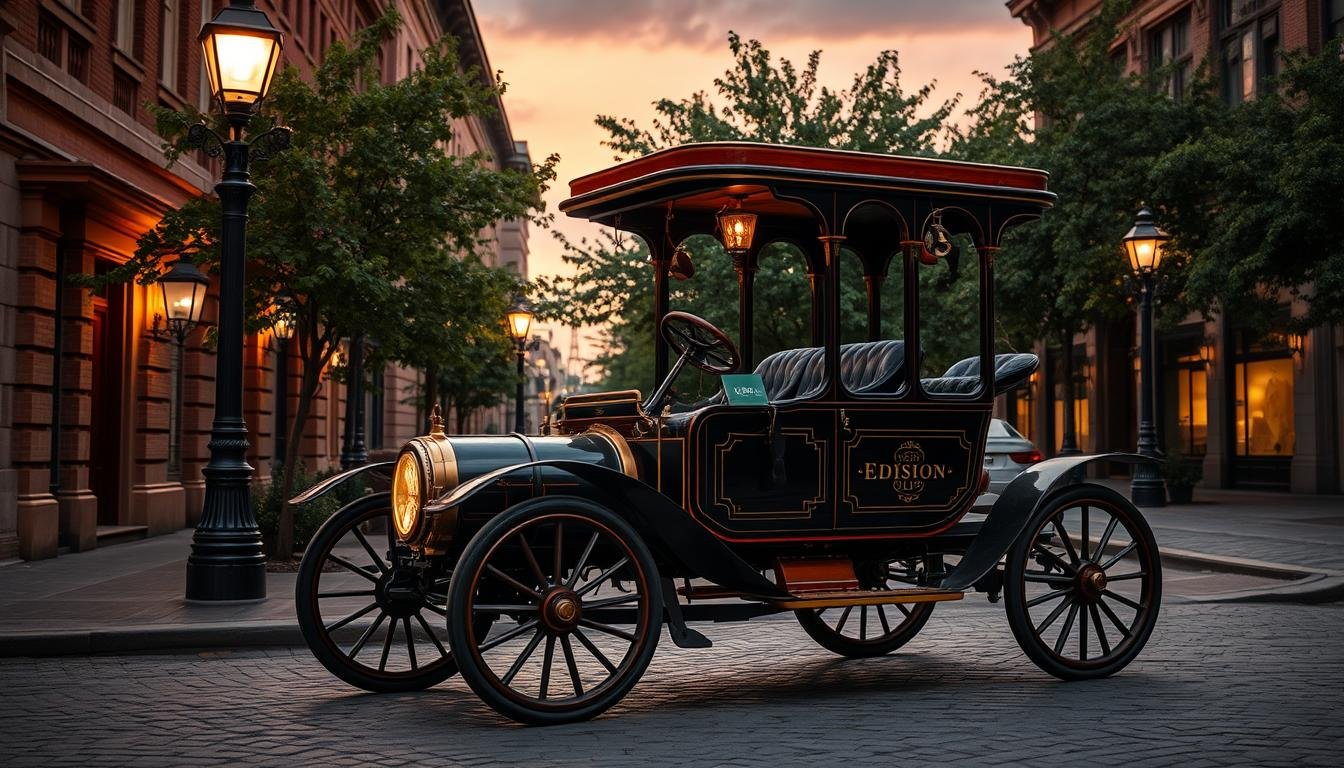

1889 Edison Electric: The Birth of Sustainable Transportation
The 1889 Edison Electric car was a major leap in transportation history. It showed Thomas Edison’s dream for green mobility. This car offered a quiet, pollution-free option when steam and gas engines were common.
It was a big step towards green travel, thanks to its lead-acid battery and light design. It was easy to use, starting the era of electric cars.
Thomas Edison’s work on green energy and car innovation is key to today’s electric vehicles. His work on electricity started a new chapter in travel. The 1889 Edison Electric car led this change, marking a big moment in car history.

Key Takeaways
- The 1889 Edison Electric car was a pioneering step towards sustainable transportation.
- Thomas Edison’s vision for electric transportation paved the way for modern electric vehicles, highlighting the importance of edison electric vehicle history.
- The 1889 Edison Electric car featured a lead-acid battery, lightweight design, and simple operation, showing the 1889 Edison Electric innovation.
- The vehicle marked the beginning of a new era in transportation, dominated by electric and hybrid vehicles, with the 1889 Edison Electric car being a significant part of the 1889 edison electric car history.
- The development of the 1889 Edison Electric car contributed to the growth of the electric vehicle market, with electric drive vehicles currently representing over 3 percent of new vehicle sales.
The Revolutionary Vision of Thomas Edison’s Electric Vehicle
Thomas Edison started exploring electric cars in the 1880s. Back then, electric car tech was getting better fast. He worked hard to make a car that used electricity, aiming for a green future.
Edison’s lab in New Jersey was a place of creativity. There, he and his team worked on many projects, including the electric car. The thomas edison electric car 1889 was a key project. It was one of the first electric cars, showing the way for others.

Edison’s Early Interest in Electric Transportation
Edison wanted to find a clean energy source. He thought electric cars could help us use less oil and clean our air.
The Concept Behind the Electric Car
Edison’s electric car idea was simple. It would run on electricity, not gasoline. His design included a battery, motor, and control system to make it move.
Edison’s Sustainable Energy Goals
Edison aimed to use less oil and more green energy. His electric car project was a big step towards that goal. It helped start the journey to more electric cars in the future.
Understanding the 1889 Edison Electric
The 1889 Edison Electric car was a big step forward in electric vehicles. It could go 25 miles per hour and travel 50 miles on a single charge. Its design focused on being simple, reliable, and efficient.
It had a lead-acid battery and electric motor for a smooth ride. The car was made to be a green alternative to fossil fuels.
The 1889 Edison Electric was light and fast for its time. It was much lighter than steam cars, thanks to its design. This made it a leader in electric cars, showing the way for the future.

Thomas Edison’s experience in electrical engineering shaped the car’s design. He had over 1,093 patents, making him a true innovator. His work on the quadruplex telegraph and electric light system helped create the 1889 Edison Electric.
By looking at the car’s features and specs, we see its importance in electric car history.
Breakthrough Features of Edison’s Electric Car
The 1889 Edison Electric car was a game-changer. It showed off Thomas Edison’s work in electric vehicles. Its performance was top-notch, thanks to its battery and power system.
The car’s battery tech was key. It was made to be efficient and reliable. Its aluminum body made it lighter, improving its range and speed. The electric motor and control system were also big deals.

Thomas Edison’s work on electric cars was a big step forward. The Edison Electric car’s success inspired many. By looking at its features, we learn about electric vehicle history and innovation.
Technical Specifications and Performance
The 1889 Edison Electric car was a game-changer in transportation. It showed the power of electric vehicles. Its design and tech set the stage for today’s electric cars.
This car was built for reliability and efficiency. Its speed, range, and weight were top-notch for its era. The electric tech used in it was a big leap forward.

The 1889 Edison Electric car performed well. Its speed, braking, and handling were impressive for its time. The car’s battery, motor, and control system made driving smooth and efficient.
The Innovative Battery Design
The 1889 Edison Electric car had a groundbreaking battery design. This design was key to its performance and efficiency. The lead-acid battery setup was a major innovation, making the car more efficient and sustainable than steam-powered vehicles.
The heart of the car was its lead-acid battery. It provided reliable power. Edison’s team worked hard to make the battery efficient and powerful. This made the car a better choice than steam-powered vehicles.

Lead-Acid Battery Configuration
The 1889 Edison Electric car used a lead-acid battery. This was a big step forward in power sources. Edison’s team made sure the battery worked well, making the car successful.
Power Output and Efficiency
The battery’s power and efficiency were key to the car’s success. Edison’s team aimed for a reliable power source with low energy loss. This made the car a better choice than steam-powered vehicles, being more efficient and green.
Comparing the Edison Electric to Steam-Powered Alternatives
The 1889 Edison Electric car was a big step in car history. It showed a better way than steam cars, which were noisy and unsafe. The Edison Electric was quieter and smoother.
It used rechargeable batteries, a big plus over steam cars. Steam cars needed constant refueling. The Edison Electric could go up to 25 mph, good for short trips.

By the early 1900s, electric cars like the Edison Electric were popular. Over 30,000 electric cars were on U.S. roads by 1912. But, gas cars soon took over.
Now, electric cars are coming back. Many car makers are making new electric models. The Edison Electric’s legacy is helping today’s electric cars.
Manufacturing Challenges and Limitations
The 1889 Edison Electric car was a groundbreaking vehicle in the automotive world. Its production faced many hurdles. The car’s innovative design, including the 1889 Edison electric car battery, was ahead of its time.
Producing the car was expensive due to high material costs and a lack of skilled workers. The battery design needed special knowledge and tools, increasing costs. Also, finding the right materials was hard, making production even tougher.

Despite these issues, the Edison Electric car was a major step forward. It greatly influenced electric vehicle development. Today, its legacy inspires new electric transportation innovations.
Impact on Early Automotive Development
The 1889 Edison Electric car was a key player in the early days of cars. It sparked a big debate between electric and gas-powered cars. Thomas Edison’s work helped grow the electric car market.
As cars evolved, the fight between electric and gas cars grew. But Edison’s car set the stage for today’s electric cars. His design influenced many car makers, showing his lasting impact.

Other innovators also pushed electric cars forward. In the early 1900s, electric cars became more common. Even though gas cars won out, Edison’s work helped start the electric car movement again today.
Edison’s Electric Vehicle Legacy
Thomas Edison’s work on electric vehicles is remembered today. His 1889 Edison Electric was a key innovation. It showed off new battery and motor tech.
Edison wanted a green, efficient transport system. His Edison Electric was a big step towards that goal.
Many electric cars followed Edison’s lead. From the early 20th century to today’s EVs, his vision has shaped the industry. The tech from the 1889 Edison electric has improved, making today’s EVs better.

Edison’s ideas are seen in today’s EV design. His vision for green transport has inspired new engineers and designers. As we aim for a greener future, Edison’s work will become even more important.
Influence on Modern EV Design
Edison’s Edison Electric has shaped modern EVs. The tech from his car has evolved, making today’s EVs efficient and green. His vision has inspired a new wave of designers to create eco-friendly, cost-effective cars.
Sustainable Transportation Vision
Edison’s dream of green transport is alive today. Companies and governments are working towards a sustainable future. The tech from the 1889 Edison electric has improved, leading to today’s efficient EVs. As we strive for a greener world, Edison’s legacy will grow.
Engineering Innovations and Patents
Thomas Edison made a big impact on electric vehicles. He held over 1,000 patents in fields like telegraphy and motion pictures. The 1889 Edison Electric car was a key innovation, with many patents for its design and tech.
Edison’s work led to better battery designs and electric motors. This was a big step forward for early electric cars.
The 1889 Edison Electric car had a unique battery and motor. Edison had patents from 278,415 to 545,405. These covered things like electric lamps and distribution systems.
Edison was very active in patenting, with 570 patents between 1983 and 1987. This shows his dedication to innovation.

Edison’s work on electric cars is remembered today. His early prototypes helped create today’s electric vehicles. Edison’s work shows his innovative spirit and commitment to technology.
The 1889 Edison Electric car was a major breakthrough. It showed Edison’s engineering skills and left a mark on the car industry.
The Edison Electric’s Competitive Advantage
The 1889 Edison Electric car stood out in the 19th century. Its design and technology made it a leader in electric cars. The electric motor and battery made it efficient and reliable.
This car was quiet, unlike the loud steam-powered vehicles of the time. Its quiet ride made it appealing for a smoother driving experience.
Operational Benefits
The Edison Electric was also easy to maintain. Its electric motor needed less upkeep than steam cars. This made it a practical choice for daily use.

Design and Technology
The Edison Electric’s design was shaped by the electric cars of the 1880s. Its battery technology was a big step forward. This made it a pioneer in electric cars of the 19th century.
Preservation and Historical Documentation
The 1889 Edison Electric car is a key piece of history. It shows how electric vehicles have evolved. Thomas Edison’s work in 1889 was a big step forward for cars.
Edison’s car had special features like its battery and power system. These have been kept safe for others to learn from. This car’s design and technology are important for understanding electric vehicles today.

There are detailed records of the 1889 Edison Electric car. These records tell us about its design and how it was tested. They show Edison’s role in making electric cars better.
Keeping this car and its records safe is very important. It shows how electric cars have changed over time. It also honors Thomas Edison’s creative spirit.
Modern Interpretations of Edison’s Design
The edison electric car’s design has shaped today’s electric vehicles. Its innovative ideas are now used in modern cars. This includes using sustainable energy and efficient batteries.
Today’s electric cars have advanced features like regenerative braking and sleek designs. These ideas come from Edison’s 1889 car. They inspire new engineers to make cars better and greener.

Design Principles in Modern EVs
Edison’s car design has influenced today’s electric vehicles. Cars now use lightweight materials, advanced batteries, and green energy. As electric cars become more popular, Edison’s ideas will keep shaping the future of cars.
Environmental Impact and Sustainability Focus
The 1889 Edison Electric car was a groundbreaking innovation in electric vehicles. Its focus on the environment and sustainability is just as important today. Edison’s work in the 19th century helped create the electric cars we use now.
Electric vehicles offer many environmental benefits, and the Edison Electric car was a leader in this area. It had an electric motor and battery, producing no emissions. This made it a greener choice than gas-powered cars. Today, we see the impact of Edison’s work in the growing popularity of electric vehicles.

In summary, the Edison Electric car was ahead of its time in environmental impact and sustainability. Its use of early electric car technology set the stage for today’s electric vehicles. As we move towards greener transportation, the Edison Electric car’s legacy will keep growing.
Edison’s Contribution to Electric Vehicle Evolution
Thomas Edison’s work on electric vehicles is seen today. His designs and vision for green energy led to today’s electric cars. Restoring Edison’s electric cars shows his lasting impact. It’s a hobby for many who want to own a piece of history.
Edison’s work on electric cars was groundbreaking. He experimented with electric motors and created new battery tech. Restoring these cars is a labor of love. It helps us understand and value electric transportation’s history.

Today, we’re moving towards greener transport, and Edison’s ideas are key. Collecting old electric cars reminds us of Edison’s role. His designs help us dream of a future with clean, innovative transport.
Legacy of Edison Electric Cars
Thomas Edison’s work on electric cars is a big deal. He started making electric vehicles in the late 1800s. The 1889 Edison Electric car is a key part of car history. It’s now in museums, showing its importance.
Today, electric cars are everywhere. In 2019, over 2% of new cars sold were electric. Edison’s work helped make this possible.
Many museums show off the 1889 Edison Electric car. They highlight its design and features. These museums help us see how electric cars evolved, thanks to Edison.

Edison’s electric cars also shaped today’s electric vehicles. Modern cars use similar designs, like light materials and efficient batteries. As electric cars become more popular, Edison’s legacy will stay important in car history.
Preservation Efforts
People are working hard to keep the 1889 Edison Electric car and other old electric cars alive. Museums and collectors are restoring these vehicles. Their work helps keep Edison’s electric car legacy alive for future generations.
Conclusion
The 1889 Edison Electric car was a big step towards green transportation. Thomas Edison had a dream of electric cars long ago. His car showed us how to make cars that are good for the planet.
Even though Edison’s car had problems and didn’t sell well, it’s impact is huge. It was quiet, needed little upkeep, and was kind to the environment. These ideas are now in today’s electric cars.
Edison’s car used new battery tech and was light, setting the stage for today’s electric vehicles. Car makers today use Edison’s ideas to make their cars better. The 1889 Edison Electric is a key part of electric car history.
FAQ
What were the key features of the 1889 Edison Electric car?
The 1889 Edison Electric car was simple, reliable, and efficient. It had a lead-acid battery and an electric motor. Its aluminum body made it light, improving its range and performance.
What were the technical specifications and performance of the 1889 Edison Electric car?
The 1889 Edison Electric car was fast, had a good range, and was light. It was quick to start, stopped well, and handled well for its time.
How did the 1889 Edison Electric car’s battery design compare to other vehicles of the era?
Its lead-acid battery was efficient and lasted long. The battery’s power and charging were new for its time, unlike steam cars.
How did the 1889 Edison Electric car compare to steam-powered vehicles of its time?
It was quieter and easier to maintain than steam cars. Its electric motor and battery made it more efficient and reliable.
What were the manufacturing challenges and limitations of the 1889 Edison Electric car?
Making the 1889 Edison Electric car was hard due to material shortages and high costs. The technology was also new and not fully understood.
How did the 1889 Edison Electric car impact the development of early automotive history?
It was a big step forward for electric cars. Its design and technology influenced the development of gas cars and modern electric vehicles.
What is Thomas Edison’s legacy in the electric vehicle industry?
Thomas Edison’s work on electric cars is remembered today. His ideas about sustainable transport and his car’s innovations helped shape today’s electric vehicles.