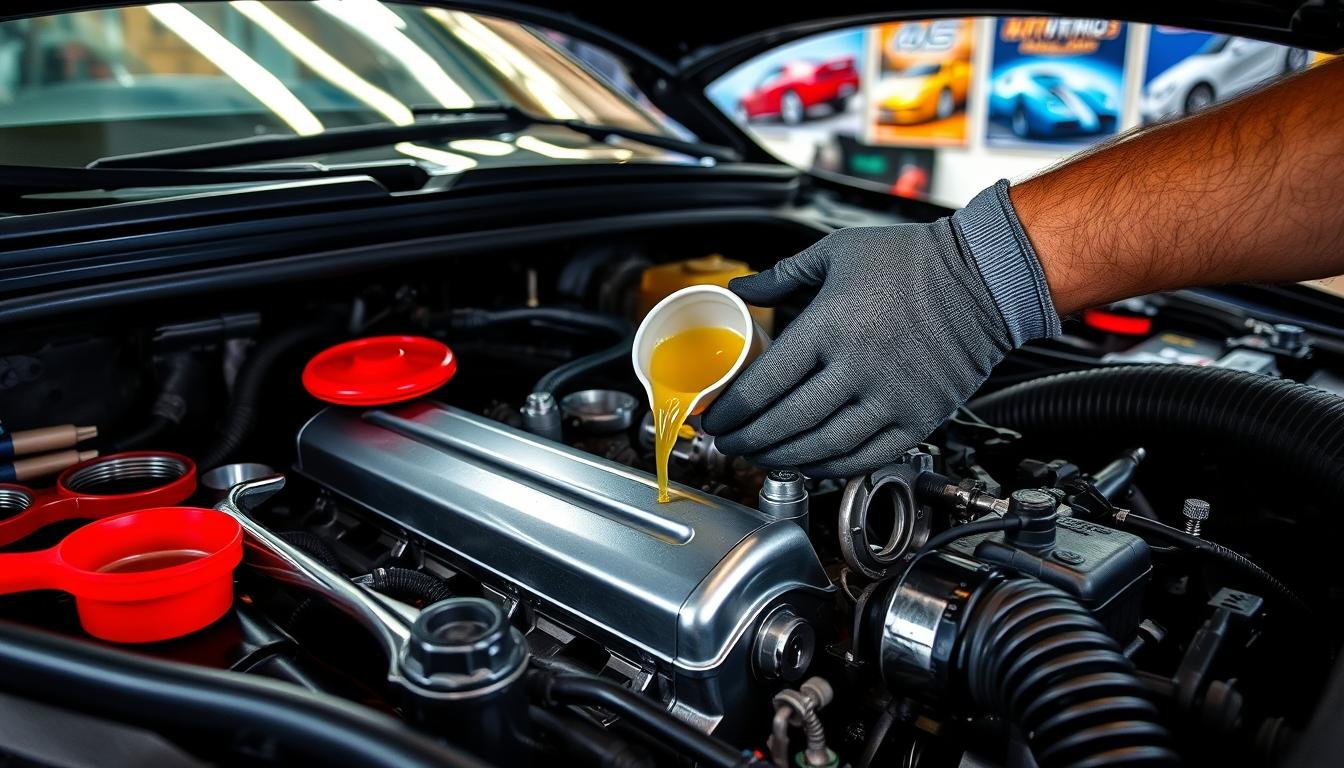
DIY Oil Change: A Step-by-Step Guide for Beginners
Changing your car’s oil might seem scary, but it’s simpler than you think. It can also save you money and time. With basic tools and some knowledge, you can keep your engine in top shape. This guide will show you how to do an oil change at home, step by step.
Knowing how to change oil is key for beginners. About 30% of car owners do it themselves. With this guide, you can too. You’ll learn to save money by doing it yourself, with savings of $20 to $50 per change.

This guide will give you the confidence to change your oil yourself. Most cars need an oil change every 5,000 to 7,500 miles. By following this guide, you’ll keep your car running well.
Key Takeaways
- Changing your car’s oil at home can save money and extend your vehicle’s lifespan.
- A diy oil change guide can provide you with the knowledge and confidence to perform your own oil change.
- Step-by-step oil change instructions are essential to ensure you’re doing it right.
- How to change oil at home is a valuable skill that can save you time and money.
- A beginner’s guide to oil change is necessary to ensure you’re performing the task correctly and safely.
- DIY oil change can save vehicle owners between $20 to $50 compared to professional service.
Why Changing Your Own Oil Makes Sense
Changing your car’s oil at home can save you money and teach you how to maintain your vehicle. Doing it yourself means you avoid the high cost of professional services. This can save you between $25 and $75 per oil change.
Regular oil changes are key to keeping your engine running well. By doing it yourself, you ensure it’s done right and on time. You’ll also get to know your car better, spotting problems early and saving money.
Some of the key diy oil change benefits include:
- Cost savings: Changing your own oil saves you money on labor and possibly on oil and filters.
- Building diy maintenance skills: It’s a great way to learn how to do other car maintenance tasks.
- Understanding your vehicle better: Working on your car helps you understand how it works and spot issues early.
Regular oil changes also help your engine last longer. Well-maintained cars can last up to 50% longer than neglected ones. By changing your own oil, you keep your car running smoothly and extend its life, saving money in the long run.

| Oil Change Interval | Cost | Benefits |
|---|---|---|
| Every 3,000 miles | $200 per year | Regular maintenance, extended engine lifespan |
| Every 5,000 miles | $80 per year | Cost savings, reduced environmental impact |
Essential Tools and Materials Needed
To change your car’s oil, you’ll need some key tools needed for oil change. These include a socket wrench, oil filter wrench, funnel, drain pan, and a new oil filter. Having the right oil change equipment is vital for a successful oil change. A diy oil change checklist helps keep you organized and ensures you have everything you need.
Here are the main tools and materials you’ll need:
- Socket wrench
- Oil filter wrench
- Funnel
- Drain pan
- New oil filter
Having a diy oil change checklist is also key. It helps you remember all the essential tools needed for oil change. With the right oil change equipment, changing your car’s oil is quick and easy.

Safety Precautions Before Starting
Before starting the oil change, it’s key to take safety steps to avoid accidents. Proper vehicle positioning is vital for your safety. Make sure the car is on a flat surface and the parking brake is on.
Wearing personal protection equipment like gloves and safety glasses is important. Also, make sure your workspace requirements are met. This includes having a well-ventilated area and a drain pan for spills.
Here are some oil change safety tips to remember:
- Always check your vehicle’s owner’s manual for specific instructions.
- Use jack stands and blocks to support the vehicle. Never get under a car only supported by a jack.
- Keep children and pets away from the work area.
By following these safety tips, you can have a safe and successful oil change.

| Safety Precaution | Importance |
|---|---|
| Proper vehicle positioning | Prevents accidents and injuries |
| Personal protection equipment | Protects from possible hazards |
| Workspace requirements | Ensures a safe and well-ventilated work area |
Choosing the Right Oil for Your Vehicle
Choosing the right oil for your car is key. Understanding oil grades is important for your car’s performance and life. You also need to decide between synthetic vs. conventional oil, each with its own pros and cons.
It’s also important to know how much oil your car needs. Most cars need between 4 to 7 quarts. But, the exact amount depends on your car’s make and model.
Understanding Oil Grades
The Society of Automotive Engineers (SAE) grades oils with a code. The code shows viscosity at cold and hot temperatures. This helps you pick the right oil for your climate and driving.

Synthetic vs. Conventional Oil
Synthetic oil lasts longer and fights sludge better than conventional oil. But, it costs more. Think about your car’s age, mileage, and how you drive when choosing between synthetic and conventional oil.
Determining Oil Quantity Needed
To find out how much oil your car needs, check your owner’s manual or the manufacturer’s website. Smaller cars need about 4 quarts, while bigger ones might need up to 8 quarts.
Locating Key Components Under Your Car
To change your car’s oil, you need to find the key parts under it. These include the oil drain plug and oil filter. Locating key components is key for a smooth oil change. Knowing where they are makes the process quick and simple.
Many sources say the main parts are the oil drain plug and oil filter. First, find the oil drain plug at the engine’s bottom. The oil filter is usually on the engine’s top or side.
Here are some tips to find these parts:
- Check your car’s manual for a diagram of the engine and the location of the oil drain plug and oil filter.
- Look for a large plug at the bottom of the engine, which is usually the oil drain plug.
- Check the top or side of the engine for a round or oval-shaped filter, which is usually the oil filter.

By following these tips, you can easily find the key parts under your car. This way, you can do a successful oil change. Always check your car’s manual for specific instructions and guidelines.
| Component | Location |
|---|---|
| Oil Drain Plug | Bottom of the engine |
| Oil Filter | Top or side of the engine |
Preparing Your Vehicle for an Oil Change
Before you start the oil change, get your vehicle ready. This means warming up the engine to make oil draining easier. Also, make sure your work area is secured to avoid accidents or spills. Lastly, have all the necessary tools ready to save time.
Preparing your vehicle is key to a successful oil change. Warming up the engine helps loosen the oil for easier draining. Securing your work area prevents accidents or spills. And, having all the necessary tools ready saves time and effort.

Here are some important tips for preparing your vehicle for an oil change:
- Warm up the engine before draining the oil
- Secure your work area to prevent accidents or spills
- Gather all necessary tools and materials
By following these steps and preparing your vehicle properly, you can ensure a safe and successful oil change. Always warm up the engine, secure your work area, and gather necessary tools for a smooth process.
| Step | Description |
|---|---|
| 1 | Warm up the engine |
| 2 | Secure your work area |
| 3 | Gather necessary tools |
Step-by-Step DIY Oil Change Guide for Beginners
Changing your car’s oil is easy and can save you money. With a diy oil change guide, you can do it yourself. This beginner’s guide to oil change will help you learn how to do it.
First, gather all the needed materials. This includes the right oil type and amount for your car. You can find this in your owner’s manual or by asking a professional. Then, find the oil drain plug and put a drip pan under it to catch spills.
Use a socket wrench to loosen the plug. Let the old oil drain completely before moving on.

After draining the old oil, replace the oil filter and add new oil. Make sure to follow the step-by-step oil change instructions carefully. This way, you can save money and learn more about your car.
Some benefits of doing a diy oil change include: * Saving money on labor costs * Understanding your car’s maintenance better * Feeling more confident in doing basic car maintenance By using a diy oil change guide, you can take care of your car’s maintenance and save money.
Proper Oil Filter Replacement Techniques
Replacing the oil filter is key in the oil change process. It includes removing the old filter, installing the new filter, and avoiding common filter installation mistakes. Web sources say oil filter replacement is vital for top performance and long life.
To start,
Removing the Old Filter
needs care to prevent spills and damage. Anoil filter wrench helps loosen and remove the old filter. Next,
Installing the New Filter
you apply a light coat of oil to the gasket. Then, tighten it to the recommended level.
Some
Common Filter Installation Mistakes
to dodge include over-tightening, which can harm the filter or engine. Also, under-tightening can cause leaks. It’s key to use the right oil filter for your car and follow the maker’s directions.

By sticking to these steps and avoiding common errors, you can do a great oil filter replacement. This keeps your vehicle in top shape. Always check your car’s manual for specific advice and guidelines.
| Oil Filter Type | Vehicle Compatibility | Price Range |
|---|---|---|
| Standard Oil Filter | Most passenger vehicles | $5-$15 |
| High-Performance Oil Filter | High-performance vehicles | $10-$25 |
| Synthetic Oil Filter | Vehicles using synthetic oil | $15-$30 |
Draining and Replacing Engine Oil
Draining and replacing engine oil is a key part of the oil change process. You need to find the oil drain plug, drain the old oil, and add new oil. It’s important to do it right to keep your vehicle running well.
First, gather your tools like a socket wrench and a drain pan. The draining engine oil step usually takes about 30 minutes. Be patient and let the oil drain fully. Then, you can add the new oil that your vehicle needs.

- Use the correct oil filter torque to avoid damaging the engine.
- Check the owner’s manual for the recommended oil type and quantity.
- Dispose of the used oil and filter responsibly.
By following these steps and taking the time to properly drain and replace engine oil, you can help extend the life of your vehicle. It will run smoothly and efficiently. Always check your owner’s manual for specific instructions for your vehicle.
Post-Change Checks and Verifications
After an oil change, it’s key to do post-change checks. This ensures your car runs well. You should check oil levels, look for leaks, and test the engine.
Experts say post-change checks keep your car healthy. Checking oil levels is a simple but important step. Use the dipstick to see if the oil is at the right level. It should be above the halfway mark for good lubrication.
Also, looking for leaks is vital. Check the oil drain plug and filter for leaks. If you find leaks, fix them right away to avoid engine damage.
Lastly, testing engine performance is key. Take your car for a drive and listen for unusual sounds or vibrations. If you notice anything off, check it out and fix it quickly.
Here are some key post-change checks to perform:
- Check oil levels
- Look for leaks
- Test engine performance
By doing these checks, you ensure your car runs well. Always check your car’s manual for specific guidance on these checks.

Regular checks can spot problems early. By adding these to your maintenance routine, you can make your car last longer and save on repairs.
| Check | Frequency | Importance |
|---|---|---|
| Oil level check | Every few weeks | High |
| Leak inspection | After oil change | High |
| Engine performance test | After oil change | Medium |
Environmental Responsibilities and Oil Disposal
When you do a DIY oil change, think about your environmental responsibilities. Dispose of used oil and filters properly. Take them to a recycling center or an authorized place. Oil disposal is key to protect our planet, as bad disposal harms water and soil.
The EPA says one oil change can pollute a million gallons of water. Recycling used oil and filters is vital. Recycling one gallon of oil can give 140,000 BTUs of energy. It also uses 33% less energy than making new oil from crude.
Here are some benefits of proper oil disposal and recycling used oil:
- It saves natural resources by needing less new oil
- It lowers the chance of water and soil pollution
- It cuts down on greenhouse gas emissions by using less energy
Remember, one gallon of used oil can harm up to 250,000 gallons of clean water if not disposed of right. By recycling your oil and filter, you help the environment and save resources. Always check local rules for oil disposal and recycling used oil.

By recycling your oil and filters, you can greatly help the environment. So, take the extra step to protect our planet for the next generations.
| Benefits of Recycling Used Oil | Environmental Impact |
|---|---|
| Conserves natural resources | Reduces the need for new oil production |
| Decreases contamination risk | Protects water and soil from pollution |
| Reduces greenhouse gas emissions | Utilizes less energy in the re-refining process |
Maintaining Records of Your Oil Changes
Keeping records of your oil changes is key for your vehicle’s health. By creating a maintenance schedule, you can remember when it’s time for an oil change. This helps you keep up with your car’s needs.
Regular oil changes can boost your car’s fuel efficiency by up to 2%. They also cut engine wear by up to 50%. To get these benefits, it’s important to track oil change intervals and documenting oil types used. This info helps you spot patterns and make smart maintenance choices.
Here are some key benefits of maintaining records of your oil changes:
- Improved fuel efficiency
- Increased engine longevity
- Reduced risk of engine damage
- Cost savings on repairs and maintenance

By maintaining records of your oil changes, your car will run better and longer. You’ll also save money on repairs and maintenance. Start creating a maintenance schedule today for a healthier, happier vehicle.
| Oil Type | Change Interval | Benefits |
|---|---|---|
| Synthetic | 7,500 to 15,000 miles | Improved fuel efficiency, increased engine longevity |
| Conventional | 3,000 to 5,000 miles | Cost-effective, suitable for most driving conditions |
Troubleshooting Common Oil Change Problems
When you do a DIY oil change, knowing common problems is key. Troubleshooting oil change problems helps you solve issues early. About 70% of DIY oil changers face at least one problem first time out. Common mistakes include over-tightening the oil filter, using the wrong oil, and forgetting the oil drain plug.
To steer clear of these issues, follow oil change troubleshooting tips. Make sure the oil filter is installed right and the oil type is correct. Here’s a list of common problems and how to fix them:
- Over-tightening the oil filter: Check the filter for proper installation and tighten it according to the manufacturer’s instructions.
- Using the wrong type of oil: Refer to your vehicle’s manual to determine the recommended oil type and viscosity.
- Failing to replace the oil drain plug: Make sure to replace the plug and tighten it securely to avoid oil leaks.

By following these troubleshooting oil change problems tips and knowing common oil change mistakes, you can have a successful oil change. Always check your vehicle’s manual for specific instructions.
Money-Saving Tips for Future Oil Changes
Keeping your vehicle in top shape can save you money. One key way is by using money-saving tips for oil changes. These strategies help lower maintenance costs and keep your car running well.
Bulk oil purchasing is a big money-saver. Buying oil in bulk can cut costs by up to 10%. Also, investing in tool investment strategies can save you money. Tools like a wrench and oil drain pan let you do oil changes yourself, avoiding professional service costs.
Maintenance timing optimization is also key. Following the recommended oil change intervals prevents engine wear and costly repairs. Here are some tips for better timing:
- Check your vehicle’s owner’s manual for the recommended oil change interval
- Keep track of your oil change history to stay on schedule
- Use a maintenance reminder app to stay organized

By using these money-saving tips, you can cut oil change costs. This includes bulk oil purchasing, tool investment strategies, and maintenance timing optimization. Always follow the recommended maintenance schedule and use the right oil for your vehicle. This ensures your car runs smoothly and lasts longer.
Conclusion
By following the steps in this guide, you can easily manage your car’s oil change. Doing it yourself saves money and teaches you about your car’s needs. You can save up to 50% compared to going to a professional.
Keeping your car’s engine oil in good shape can improve fuel efficiency by 5%. It can also make your engine last 100,000 miles longer. Plus, doing it yourself makes you feel great, with over 50% of DIY oil changers saying their engine runs better.
Keep learning about DIY oil changes. Always check your car’s manual for the right way to do it. Use Audi Genuine Parts and Accessories for the best care. With the right tools and safety, you’ll become a confident car owner. You’ll drive your Audi with confidence for many miles.
FAQ
What are the benefits of changing my own oil?
Changing your own oil can save you money. It also helps you learn DIY maintenance skills. Plus, you get to understand your vehicle better.
What essential tools and materials do I need for a DIY oil change?
You’ll need a socket wrench, oil filter wrench, and a funnel. Also, a drain pan and the right engine oil are necessary.
What safety precautions should I take when changing my own oil?
First, make sure your car is in a safe spot. Wear protective gear. And have a clean, safe area to work in.
How do I choose the right oil for my vehicle?
Start by learning about oil grades. Decide between synthetic or conventional oil. Then, figure out how much oil you need for your car.
Where can I locate the key components under my car for an oil change?
The oil drain plug and oil filter are under your car. They’re easy to find and access.
What steps should I take to prepare my vehicle for an oil change?
Warm up your engine first. Then, secure your workspace. Gather all your tools and materials.
How do I properly replace the oil filter during a DIY oil change?
Remove the old filter and put in the new one. Make sure not to over-tighten or seat it wrong.
How do I properly drain and replace the engine oil?
Find the oil drain plug and drain the old oil. Then, add the right amount of new oil.
What post-change checks and verifications should I perform?
Check the oil level and look for leaks. Also, test the engine to make sure the oil change worked.
How should I dispose of the used oil and filters responsibly?
Recycle the used oil and filters at a proper facility. This helps protect the environment.
Why is it important to maintain records of my oil changes?
Keeping records helps you track your car’s maintenance. It ensures your car runs well and lasts longer.
What are some common oil change problems, and how can I troubleshoot them?
Problems like over-tightening the oil filter or using the wrong oil can happen. Troubleshooting these issues helps avoid future problems.
How can I save money on future oil changes?
Buy oil in bulk and invest in good tools. Also, plan your maintenance schedule to save money on DIY oil changes.